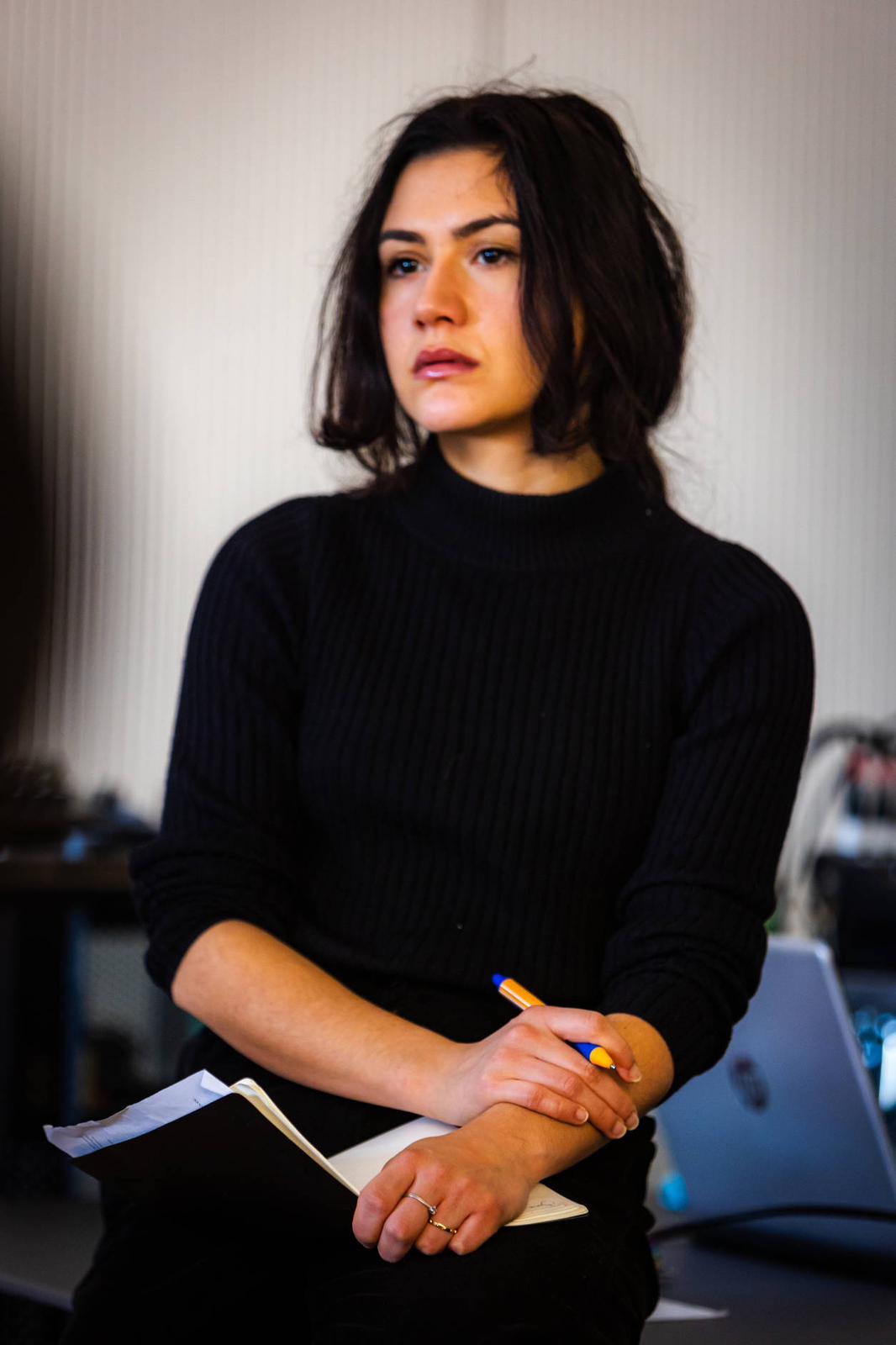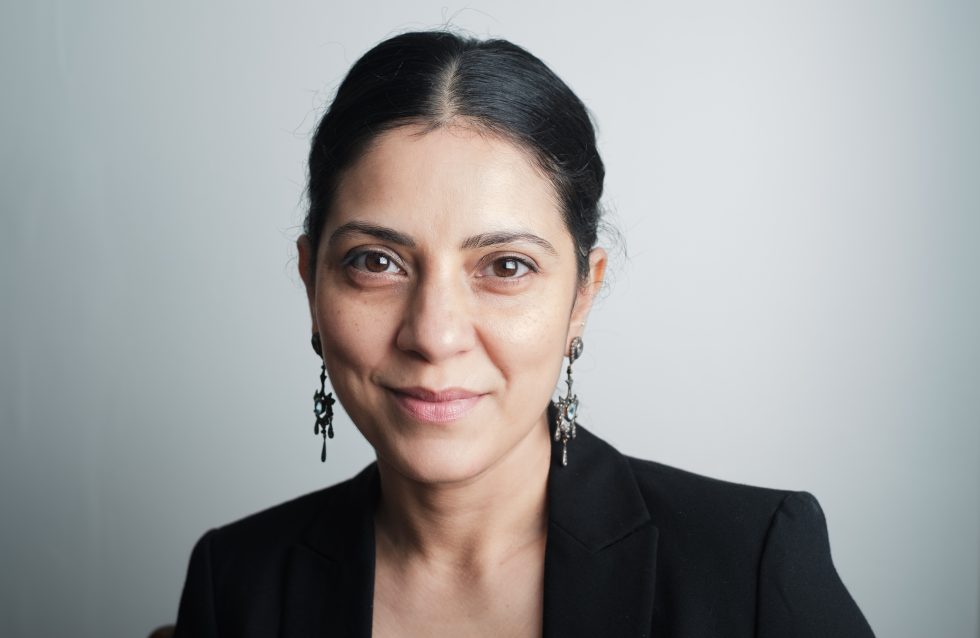
Cover: Mitali Mukherjee. Source: Ankur Sabharwal
Mitali Mukherjee was appointed Director of the Reuters Institute almost one year ago.
Formerly a consulting Business Editor at The Wire and Mint, Markets Editor at CNBC TV 18, Prime Time Anchor at TV Today and Doordarshan, Fellow at The Observer Research Foundation, and co-founder of two start-ups devoted to civil society and financial literacy: a trajectory of rare breadth and ambition.
She now shares thoughts on her experience, challenges and achievements, after one year of directorship.
“It has been quite intense to put it mildly. We had lot changes shortly after I was appointed, just on the back of that came the biggest moment in terms of funding and supporting independent journalism, there was a big withdrawing by founders like USA.
I think that was kind of a big shift in journalism per se, but also in the geopolitical domain”.
Increasing anxiety
The landscape is changing in ways that were difficult to anticipate. The ecosystem has shifted enormously: images can now be generated with artificial intelligence in seconds, news creators are emerging across the world as the gathering points where people interact and exchange views on current affairs.
“I think the first fits into the second, because what is happening in journalism brings increased anxiety among the people engaging with the news, low interest in news – also as a self-preserving mechanism, as people want to find calm and quiet.
For me and the institute, we’re consistently thinking about our work and two things keep coming back. What can we do that continously gives values to the industry? How can we stay committed to the goal of connecting practice and research and driving conversations around the future of news.Which is how we provide information, whilst asking what the public thinks about it. What does the public think about climate journalism, AI in the newsroom and so on”.
A ‘glocal’ journalism?
As the leader of a global research institute, Mitali Mukherjee is inevitably called upon to engage with topics whose resonance and sensitivity vary considerably depending on one’s upbringing, cultural background, and geographic context. A personal story, therefore, must be balanced with the responsibilities of leading an institution whose remit is genuinely international.
“I mean, one is the institute itself and how we think about our work and I think what makes us unique is that we have always seen ourselves as an academic institute that is fed by input from the industry.
We don’t think of us sitting in a separate universe from what the news industry is grappling with: we are always informed both by research and industry, so we focus on certain aspects that we believe ar our strengths rather than many things, and we are try to keep on the pulse of that. I am surrounded by brilliant academics and colleagues and we learn from each other in conversations.
I’ve been a journalist for over two decades and I practiced journalist in a country thathas been a challenging space for critical journalism and that struggles with corporate ownership of a large parte of mainstream media and subject to advertising pressure, so independent journalists constantly need to rethink the way they work”.
A matter of power and curiosity
I come from academia as well, and I used to feel genuinely suffocated by the fact that all the knowledge being produced was circulating within a very small circle of people, and that was deeply frustrating, because my ambition was always to do something of consequence for society at large. I believe the most rewarding outcome is when you can draw on the best of both worlds, finding people who are capable of translating that knowledge into something accessible and alive.
“The common point between research and journalism is curiosity, to understand why something is happening and what are the phenomena behind it.
One final point is that I also recognize myself as a woman of color, and I know that news and access to information doesn’t look the same for everyone. In countries like the UK for example, the typical ‘news enthusiast’ would be mostly male and 55+, and mostly white. That is something to think about.
Information can be powerful when you have it. And it can be a barometer of privilege. Part of our job is understanding who has that privilege and who does not”.
There are common patterns across markets, as well as meaningful differences, not least because journalism is shaped simultaneously by technology and society, by the medium and by the habitus. Change is moving very rapidly, but at uneven speeds. In Italy, for instance (an ageing society, as you know), television retains considerable authority as a source of news and information, which may well not hold in other contexts.
“I mean absolutely, television in general remains in many countries still a very robust media to gain access to news and information. With print we can see a sharply decline in many markets across America and Europe; in a few markets like Japan print circulation is still high but they are unique examples, rather than the broad range of what we see.
The hardware or gateways to news and the habits are two fundamental metrics to look at news consumptions”.
A digital-first generation
In your report on young audiences, one of the central findings was that it is now reductive to describe people simply as “digital first”. The more precise characterisation is that young audiences are social first: a vast proportion of their interactions take place on social media platforms, and their encounters with news tend to be incidental rather than sought.
“I think on the metrics of how people think about the news, or news values, it is actually quite similar across ages: young people also want to see news that is trustworthy, transparent and valuable to their lives.
The difference we can see is in degrees and in some cases we see differences on impartiality: young people believe that on some issues like climate change there is less room for impartiality and it is quite clear that they want a particular stand on what is right or wrong”.
So, young people know what is happening in the world; they simply arrive there by different routes.
“While the gateways to access news may be different; how they think about news is similar.
Just because young people access news via social and video platforms does not mean they are not informed. Young teenager know what is happening in the world, just they do not get there the way we – older generations do.
We have to be thoughtful about how we approach them. If we want to bring back a connection with journalism, or to protect and ensure a robust democratic society, we need to actively ensure audiences feel heard and fully equipped with information at hand.
How to regain trust
With Mitali Mukherjee, we share the fact that it is time to accept that the professional boundaries of journalism are becoming more porous, we can better understand why trust and empathy have become the primary navigational tools in the contemporary media landscape.
“People increasingly have less trust in several institutions as such, probably reflecting the lack of trust in the geopolitical dimension. But having said that, over the years we asked people: what do you do and where do you go when you want to check information?
If you want to think of their response in terms of a hierarchy of intent, people still would first go to the news organisation they trust, whether it is television or print, to news organisations with a reputation of covering the news and having deep knowledge on the topic”.
And yet news organisations find themselves in the eye of a perfect storm, of which declining trust is only one element. Business models are under pressure from the spread of authoritarian governance in various parts of the world; fewer people are in a position to pay for news given the pressures of inflation and the cost of living; and the ecosystem has fragmented dramatically, from citizen journalism to the creator economy. The real question becomes: at what point and in what manner did we lose the essential connection with our audience?
“There are no easy answers, but one way out is starting to think for instance: what do partnerships look like?”
Claudio Cerasa suggested to us that news organisations ought to begin thinking of themselves as brands.
“Yeah, I am not saying it is easy. Some news organizations are already doing that with creator partnerships and so on. There could be challenges like a clash of values and approach, but it is time to start binding together rather than trying to face this alone”.
Your most recent report on future trends mentions the concept of “liquid content”. How can that help particularly small and leaner organizations?
“Some of this reflects how the industry is approaching innovation more broadly. The question at the heart of liquid content is deceptively simple: in how many forms can a single story be told?
You can always extract aspects of the story in small audio capsules, create videos and so on. But small and lean organizations should think about: how can I convey the content, and play with it? It is a space also of experimentation, and it is important that organizations ask themselves how that content can be made more accessibile.
And out there, there are journalists in Scandinavia or India or South Africa doing amazing work around liquid content”.
People nourish journalism
I really appreciate the way Mitali Mukherjee has championed the fellowship programme and made it so central to the public conversation around the Institute. Most of her interviews return to it, and one senses a genuine attachment.
We have been speaking a lot about the expectations and media habits of audiences; turning to the profession itself, I ask her what competencies and qualities she believes young journalists most need to cultivate today.
“So The Reuters Institute marked its 20th anniversary this year, but the program predates it, we are talking about more than 40 years ago. So the genesis of the institute is in many ways in the work we are doing with fellows: it is hugely important that we acknowledge that the most important resource in news are individuals, and we need to invest on them.
We support projects that we think are important for journalism, but most importantly our fellows find a community, they join a network, they learn that even if they practice journalism in Hong Kong, Thailand or Burkina Faso, aspects of the work can be very similar, as well as in terms fo the challenges they face.
Some of these experiences can be quite life changing, in terms of how you emerge from those experiences as a person and what you bring back to your journalist community. I am very protective of them, and also very proud of them. We do not claim to teach anything to those coming to the Institute, we are here to support and also learn from them: they are our window into the world”.